A Diu Biban – Praise be! We’re coming to the chic new area of Salies, which aristocrats and genteel people from all over France and Europe will come to settle.
But before we continue our tour, there’s something I must tell you! At that time, Salies was reputed to be a dirty town, with animals in the streets and manure littering the ground and squares. When wealthy outsiders began to arrive in Salies, the national press and spa guides revealed how unwholesome this small Béarn town was. It was clear that the town urgently needed to fix its reputation and clean itself up with a programme of improvements. They included covering the saltwater pool in the town centre, installing mains drainage and creating wide, open streets. The new spa quarter was built outside the old town, in keeping with the new Haussmannian architectural style.
Come into the middle of the public garden towards the bandstand. This is one of the landmarks of the foreign colony. Built in 1887, the bandstand offered afternoon concerts for bathers and was a popular meeting place for “curistes”.
Opposite you, before the construction of the thermal baths which visitors still enjoy today, was the first industrial salt works.
Since 1804, French salt laws have required all salt production sites to manufacture 500 tons of salt per year. To continue producing this salt, the Salies Parts-Prenants built the town’s first industrial site at their own expense. Enclosed by a 3-meter-high wooden fence and under surveillance night and day, the saltworks could produce all Salies’ salt in a single location.
In 1888, a fire completely destroyed the factory, which was rebuilt near the train station a short distance away. In its place, on the site of the fire, the thermal spa was built. That is the building you see today, dating from 1888. Echoing the oriental-style architecture that was very fashionable at the time, you’ll see the Chalet on your right, a popular spot for local and foreign gentlemen to discuss politics and business over a glass of absinthe or while smoking a cigar.
All around you are the ghosts of old hotels: the Hôtel de la Paix on your left, where Marcel Proust and his mother stayed for several years, and on your right, the Hôtel du Parc, which you can still reach by crossing Boulevard Saint-Guily. It was in this hotel that great personalities and members of the international aristocracy stayed throughout the year. Claude Monet came to exhibit his paintings in May 1886. Do have a look inside this immense building, where you’ll find all the luxury of a Belle Epoque hotel.
As you approach the wild boar roundabout where the Bayonne and Puyoô roads meet, you’ll see the old railway line, though its bridges have all gone now. Hidden in the heights to your right, the ruins of the Hôtel de France et d’Angleterre eagerly wait to be restored.
Our walk is coming to an end, and I hope it has pleased you. Together, we have walked through almost 600 years of history…
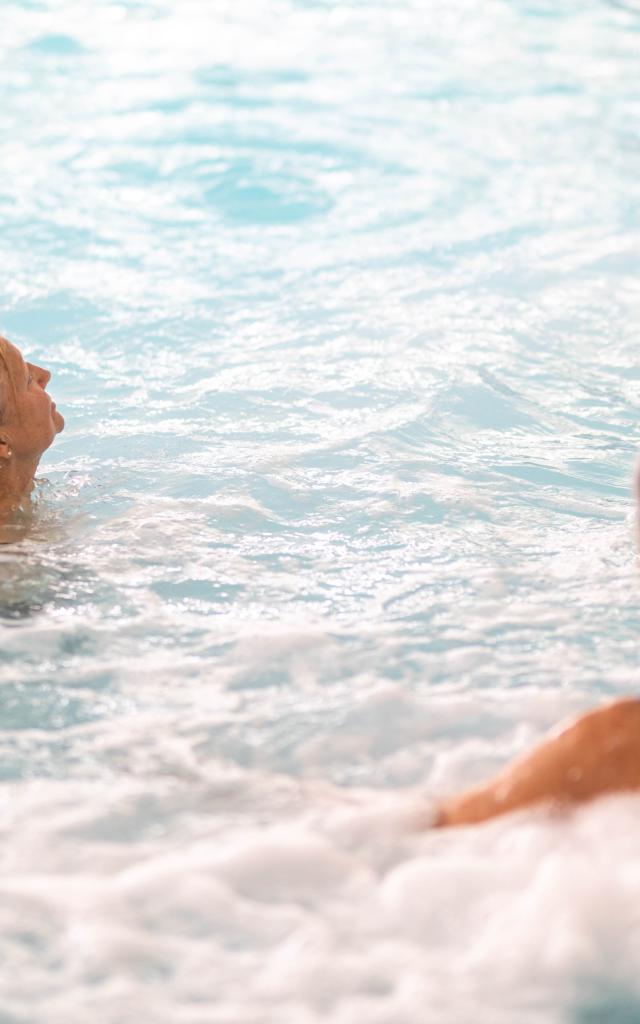
I invite you to make the most of Salies by visiting the Salines saltworks and the Museum of Salt. Do sample some of our fine charcuterie and tasty dishes, and why not relax or pep up your energy with a saltwater bath at the thermal spa…
And as we say in these parts, Adishatz !